Grand Rapids Tile Contractors logoTile Contractor you can count on in Grand Rapids.
Tile Flooring Installation · Grand Rapids

Tile Flooring Installation in Grand Rapids

We install tile floors in Grand Rapids kitchens, entries, mudrooms, and baths. We start at the subfloor. You get a straight read on what your floor needs and a start date you can plan around.

Free · 24-hour response

Free Tile Flooring Installation quote.

Response under 24 hours. No spam. Contact info is used only to send the quote.

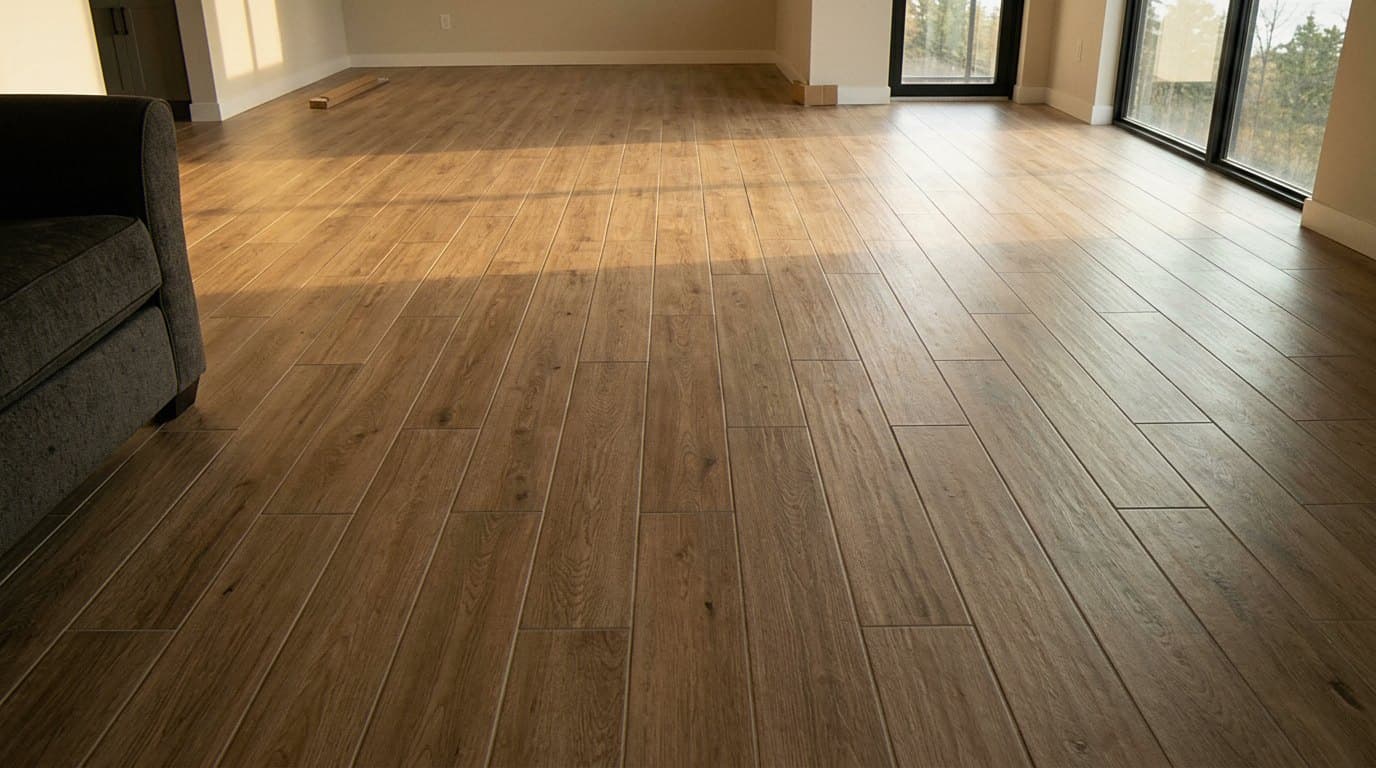
Wood-look plank tile floor in an empty living room
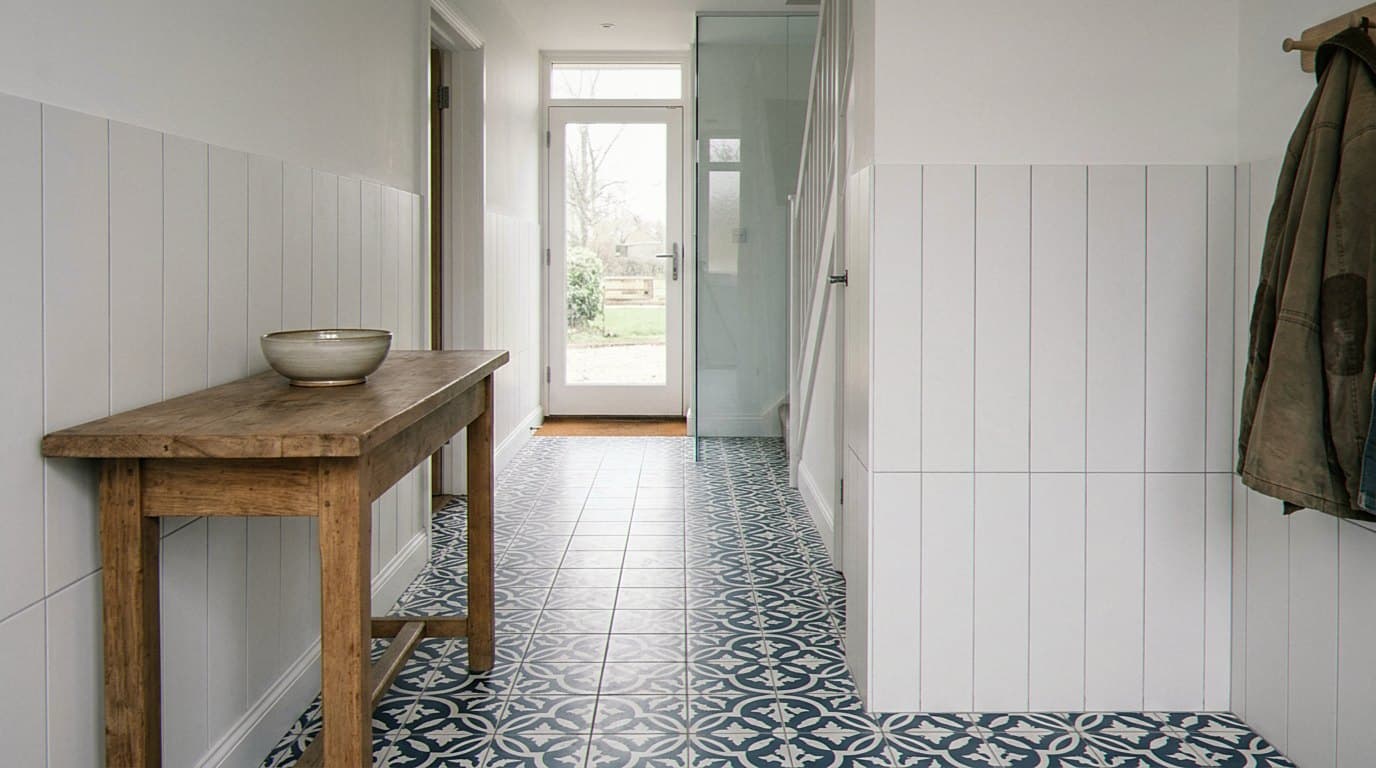
Patterned tile entry hallway with a console table
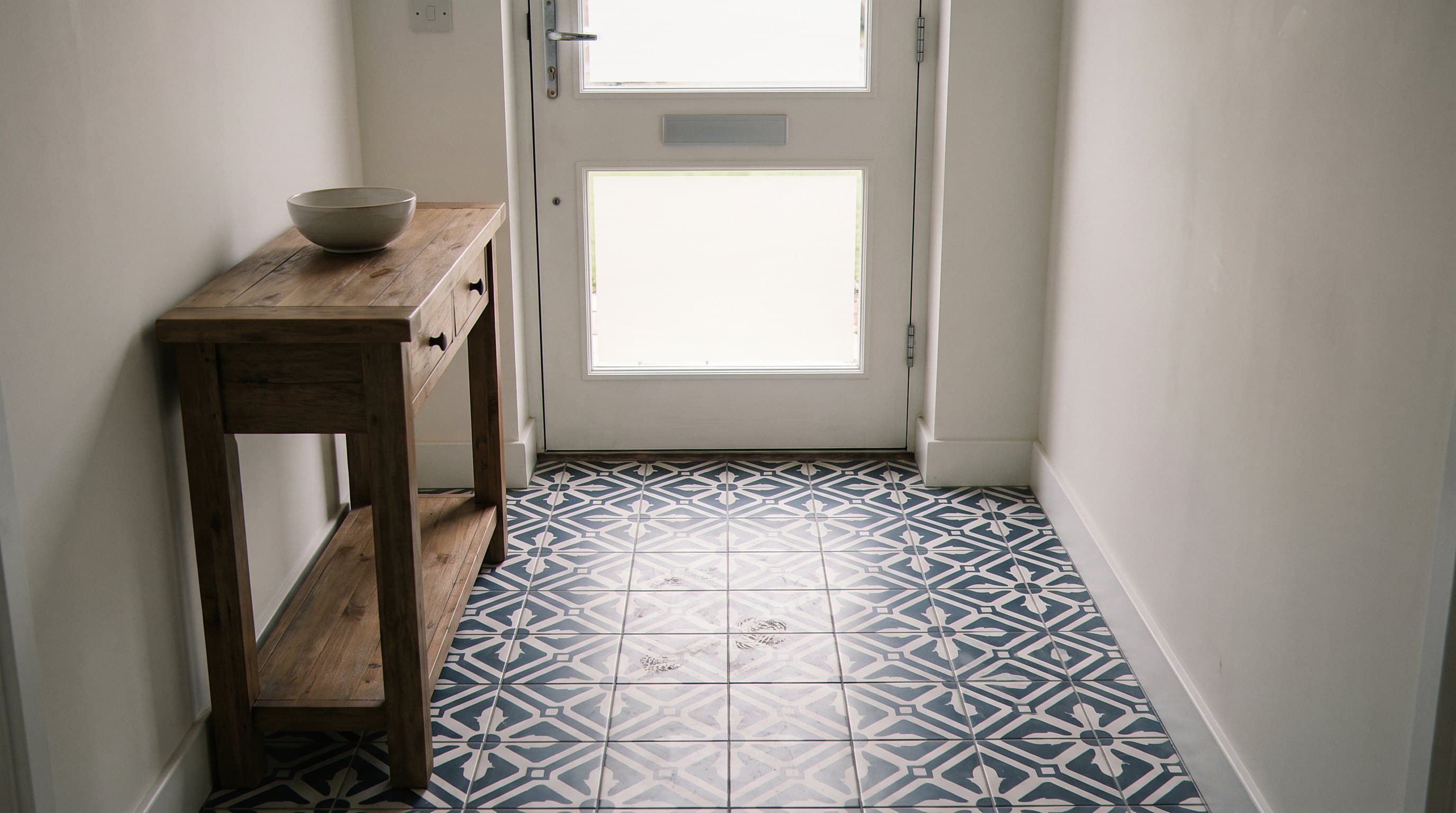
Entry hallway floor tile beside the front door
What we do

What a tile floor job looks like in a Grand Rapids home

Most of the tile floors we set in Grand Rapids go in for one of two reasons. Either the old floor gave out, or winter did it in. Snowmelt and road salt come off boots all season, and vinyl or laminate near the back door swells, curls, and lets go at the seams. Tile does not care about that. We start every job under the surface, because a tile floor is only as steady as what sits below it. In an older home off Wealthy Street that means checking joist spacing and how much the floor flexes when you walk it. In a newer build out toward Cascade it usually means reading the slab for cracks and low spots.

Prep is the part nobody sees and the part that decides how the floor holds up. Over wood we add backer board or an uncoupling membrane, so the tile and the framing can move at their own pace without cracking grout lines. Over concrete we grind the high spots, fill the dips, and let a leveling compound bring the whole room into one plane. Then we dry lay the field. Seeing where the cuts land before any mortar goes down is what keeps a sliver of tile out of your doorway and a grout line from running crooked past the island. Once the layout reads right, we set tile, back butter the big pieces, and keep a straight edge on the work as we go.

  • A floor that shrugs off salt, slush, and wet boots through a Grand Rapids winter, in the rooms that take the worst of it.
  • Subfloor work handled first, so your grout lines stay tight instead of cracking out a season later.
  • Layout planned before any mortar goes down, with the cuts pushed toward walls where nobody looks.
  • Flat setting on big tile, checked as we go, so you never feel a lip under a bare foot.
  • One crew from tear out through grout and trim, and the same people answering when you call with a question.
A tile floor fails from the bottom up. Get the base flat and stiff, and the tile will outlast the room around it.

Tile choice changes the job more than most people expect. Porcelain is dense, takes a beating, and works almost anywhere in the house, which is why it ends up in most of the kitchens and entryways we do. Glazed ceramic costs less and fits fine in a guest bath. Natural stone looks like nothing else, though it wants a stiffer floor under it and a sealer on a schedule. Big planks and wide squares are popular right now, and they punish a sloppy base, because any hump in the slab shows up as a raised edge you can catch with a bare toe. We flatten first. Then we use a mortar built for larger pieces and set leveling clips across the whole field. Want warm tile underfoot in January? The heat mat goes in during this same stage, not after.

If you are ready to price out a tile floor, call us and tell us the room, the rough size, and what is down there now. We will walk it. We check how much the floor moves, look at the doorways and transitions, and tell you what the job actually takes. If your subfloor needs work first, you hear that from us before you pick a tile. We work across Grand Rapids and the towns around it, from East Grand Rapids and Kentwood out to Grandville, Rockford, and Ada.
Materials

Tile, mortar, and what goes under the floor

We set what fits the room and the traffic it takes. Porcelain goes in an entry or a mudroom, because it is dense enough to handle grit and salt without wearing dull. Ceramic works in a spare bath. Stone goes where somebody wants it and the floor can carry the weight. Underneath, the choices matter just as much as the tile you see. Cement backer board screwed and set in thinset over a solid wood subfloor is the old reliable. An uncoupling membrane does the same job in less height, which helps when a doorway or a dishwasher leaves you no room to build up. On a basement slab or in a wet room we add a waterproof layer before any tile goes down.

Grout is the other decision people skip past. Sanded cement grout is standard for most floor joints and takes color well. Epoxy grout costs more and takes longer to work with, though it stands up to stains in a busy kitchen better than anything else we use. Joint width matters too. Tight joints look clean and leave less room for error, while a big rustic tile often reads better with a wider line. We also leave soft joints where the floor meets walls and cabinets. A tile field needs somewhere to move when the house swells in a humid July and shrinks again in a January cold snap.

  • Uncoupling membrane over wood framing, so house movement does not travel into your grout lines.
  • Waterproofing under the tile in basements, mudrooms, and any room where water hits the floor.
  • Leveling compound on a low slab, checked with a long straight edge before we set tile.
  • Heat mats bedded in the mortar when you want warm tile underfoot in a Grand Rapids winter.
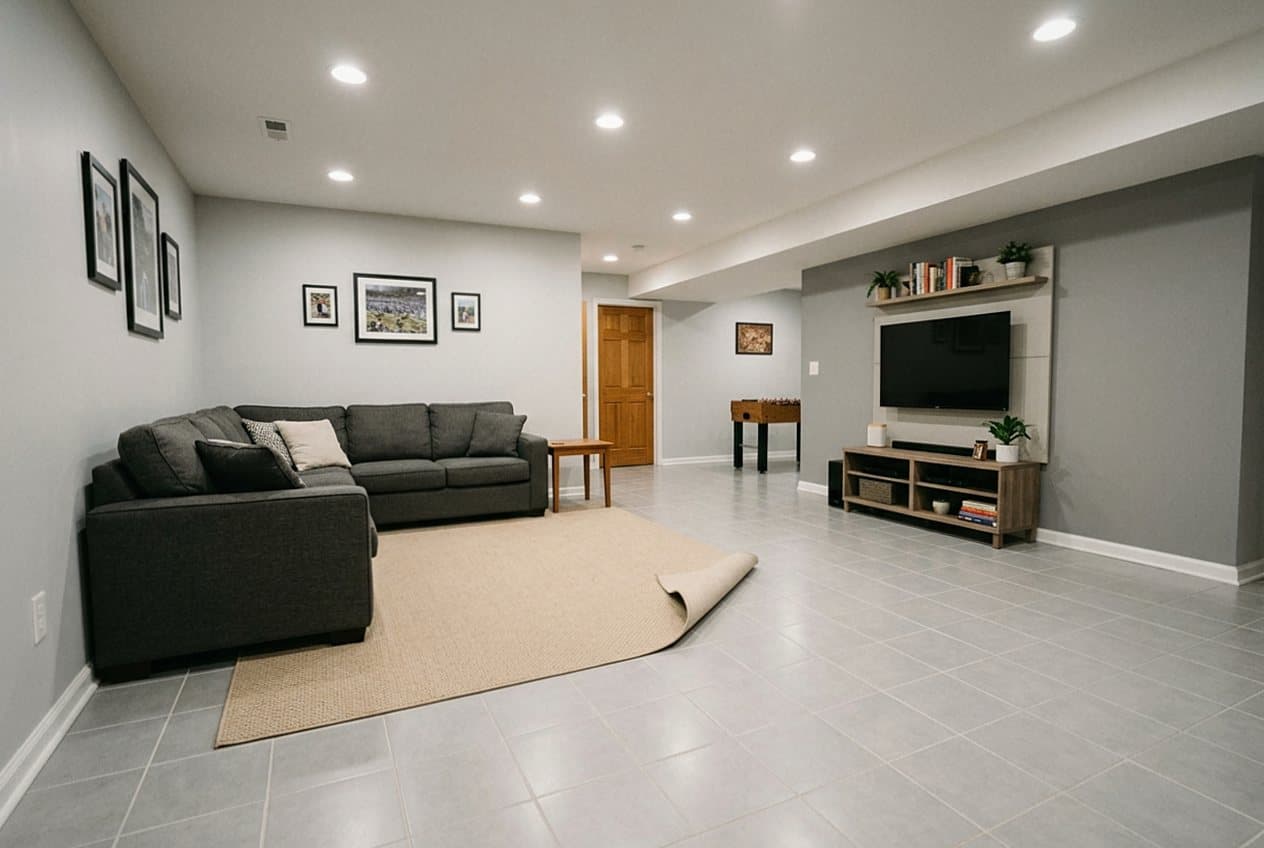
Gray tile floor in a finished basement lounge
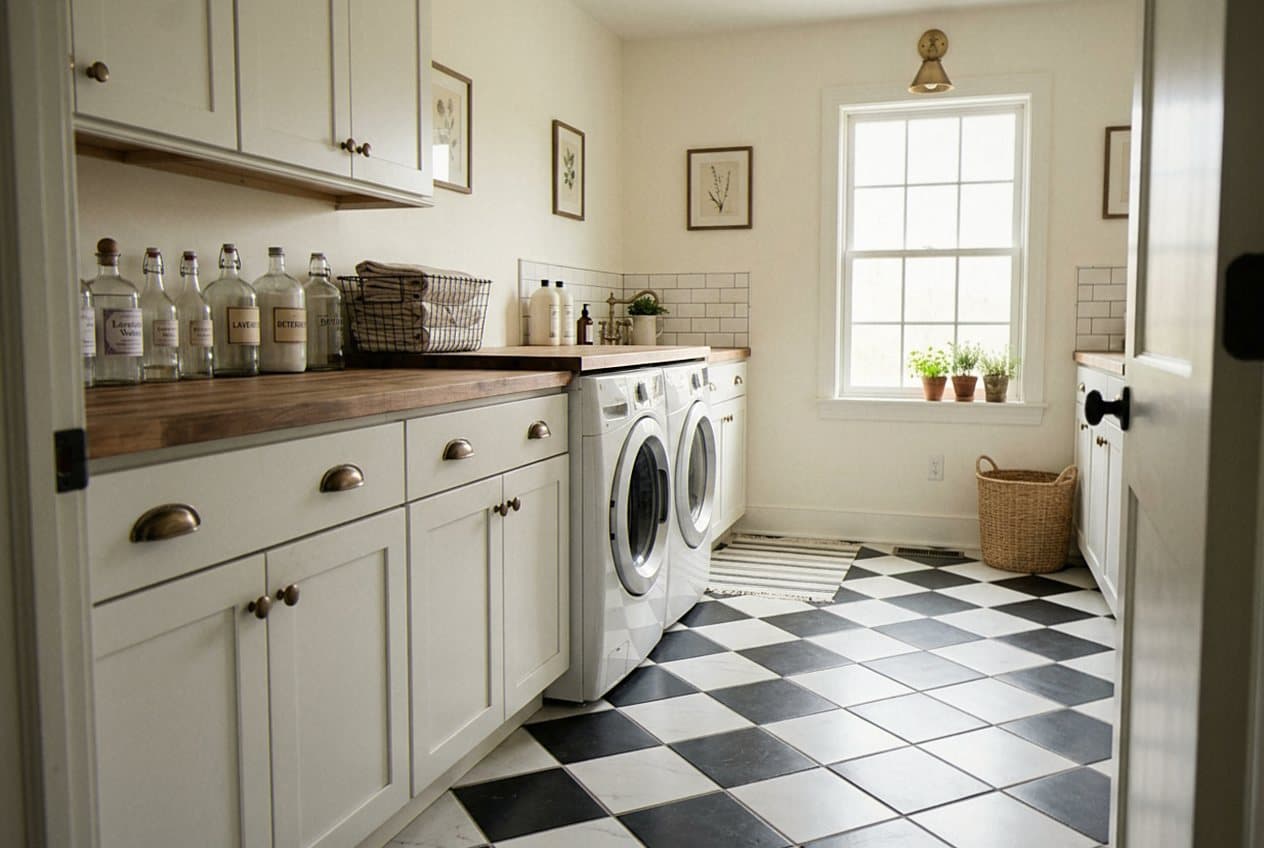
Black and white checkerboard tile in a laundry room
What about the alternatives?

Floor options we get asked about

Here is how the usual choices play out in a Grand Rapids house, with real winters and real traffic through the back door. This is what we would tell a neighbor. The right answer depends on the room, on what sits under the floor, and on how much use the floor takes.

Porcelain tile over a prepped subfloor

Our default for kitchens, entries, mudrooms, and baths. It is hard, dense, and it does not mind salt, water, or a dog coming in with wet paws.

Recommended

Glazed ceramic tile

Easier on the wallet and fine in a guest bath, a laundry room, or anywhere the floor sees light use. We steer away from it in a busy entry.

Acceptable

Natural stone such as marble, travertine, or slate

Nothing else looks like it. Stone wants a stiffer floor under it, a sealer on a schedule, and gentler cleaning than porcelain ever needs.

Acceptable

Large format porcelain that reads as wood or concrete

A strong look in open rooms. It only works if the base is dead flat, so plan on more prep time before the tile goes down.

Acceptable

Tile set straight over old vinyl or a springy floor

Skip it. The bond is only as good as the layer under it, and a floor that flexes will crack grout and pop tile within a season or two.

Skip

Peel and stick or floating tile panels in a wet room

Skip it near water. Seams open, edges lift, and you end up paying twice to have the room done right.

Skip
How it goes

From quote to walk-on, fast.

STEP 01

Your Inquiry

Call or send the short form with what is going on at your place. A sentence or two is plenty to get started.

STEP 02

We Talk It Through

We go over the situation, ask the questions that matter, and tell you plainly what we would do next.

STEP 03

A Clear Plan

You get a written rundown of the work, the order it happens in, and what to expect on the day.

STEP 04

The Work Gets Done

The crew shows up when we said, does the job, and walks you through the result before leaving.

Before you book

Straight answers before you commit

People ask us the same handful of things before a tile floor goes in. Here are the honest answers, including the ones that talk somebody out of the job.

Plan on a few days for a normal kitchen floor. Tear out and prep take the first day or two, setting takes a day, and grout goes in once the mortar has cured. You can usually walk on it the day after we grout, though we ask you to keep heavy furniture and appliances off a while longer. Before we start, you get a day by day plan so you can work out meals, pets, and parking around it.
Sometimes. Over an old ceramic floor that is solid and still stuck down tight, yes, as long as the added height still clears your doors. Over vinyl, laminate, or a floor that moves under your feet, no. We would rather pull it up and start clean than set new tile on a base we do not trust. All of that gets checked on the first visit, not after the truck is loaded.
Grout cracks because the floor under it moves, not because somebody used bad grout. That is why we look at joist span and how far the floor flexes before we quote anything, then add an uncoupling layer over wood framing. We also leave soft joints at the walls and at any break in the framing. Get those two things right and the grout stays put.
Usually within a couple of weeks, and sooner when a job wraps early. Winter tends to be our fastest window, since outdoor trades slow down and indoor work keeps rolling right through the snow. Call us and you will hear the real date we have open, not a date we hope to hit.
No. Bring us a photo or a rough idea and we will work from that. It helps to know whether you lean toward small tile, big planks, or stone, because that choice changes the prep and the mortar we use. We can also meet you at a supplier and pull options that suit the room, if you would rather not sort through it alone.
Worth doing in a bathroom or in a kitchen you stand in every morning. The mat goes down after prep and before tile, so it has to be settled early. Adding heat later means tearing out the floor you just put in, which is why we bring it up at the first visit.
Aftercare

Keeping a tile floor looking new

Tile is easy to live with, and most of what wears it out comes down to habits rather than the tile itself. Grit is the real enemy. Sand and road salt tracked in through a Grand Rapids winter act like sandpaper on a glazed surface, and the fine stuff works its way down into the grout joints. A mat at each door and a quick sweep during the salty months does more good than any bottle you can buy. Past that, keep the cleaning simple and stay off the harsh stuff, since strong acids and bleach eat away at cement grout over time.

  • Put a stiff mat inside and outside every entry door, then shake them out often once the salt trucks start running.
  • Sweep or vacuum the grit before you mop, so you are not dragging sand across the glaze.
  • Mop with warm water and a mild cleaner made for tile. Vinegar and bleach do not belong on cement grout.
  • Seal cement grout after it cures, then freshen the seal every couple of years in kitchens and entries.
  • Wipe spills off stone quickly, because wine, coffee, and citrus can etch the surface before you notice.
  • Call us early about a hairline crack or one loose tile, since a small spot is far easier to fix than a spreading one.
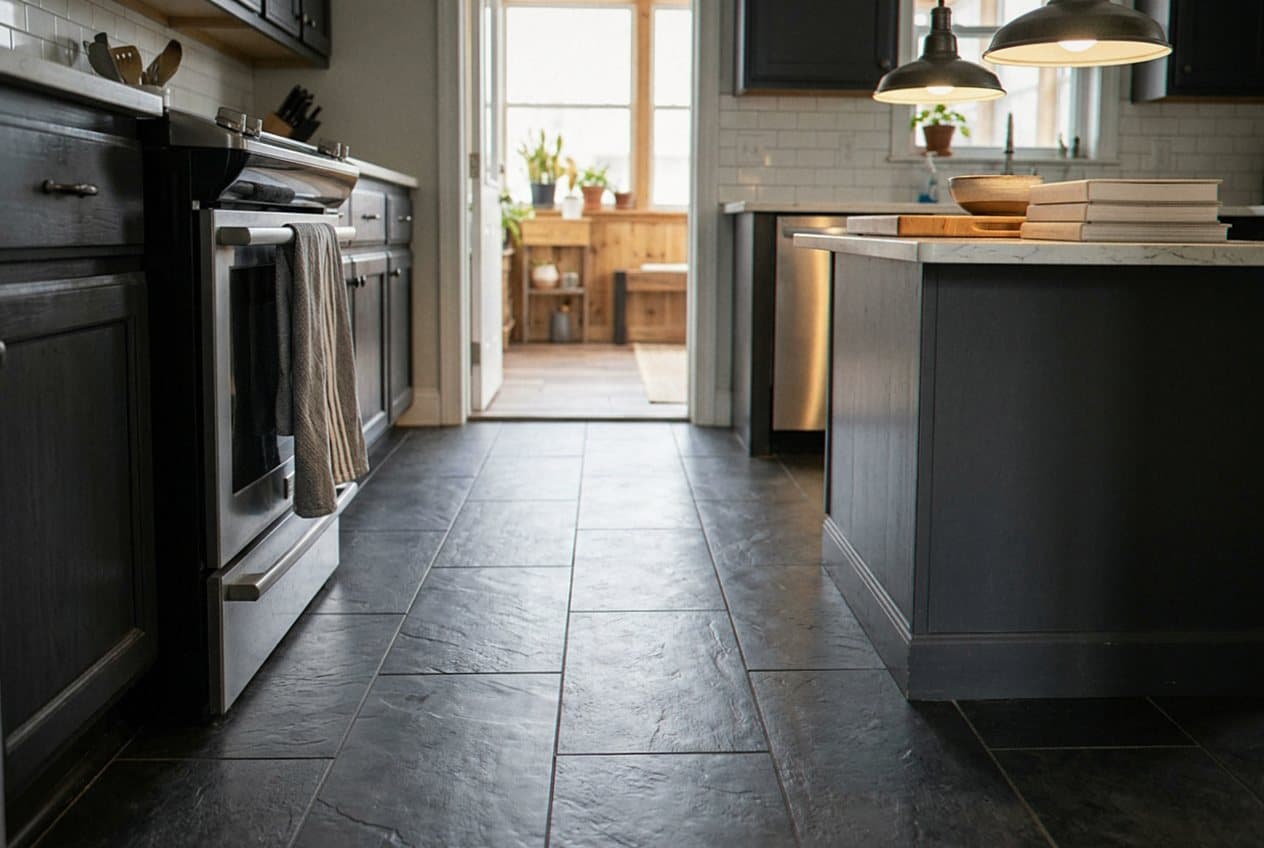
Dark slate-look porcelain floor through a kitchen island
FAQ

Tile flooring questions we hear in Grand Rapids

Ready when you are

Ready to get started in Grand Rapids?

Call or send the form with what is going on. You get a straight answer and a written quote, fast.

Call NowFree Quote